
We spent four days in Taiwan’s offshore wind and energy ecosystem: Asia Offshore Wind Day on the 13th, then Energy Taiwan from the 14th to the 16th. We went to understand the energy sector in APAC and meet the people working in it. We’ve already worked with people in Taiwan’s offshore wind industry, like our operations scheduling work with Taichung Offshore Partner ↗, and it’s an ecosystem we’re excited to dig deeper into.
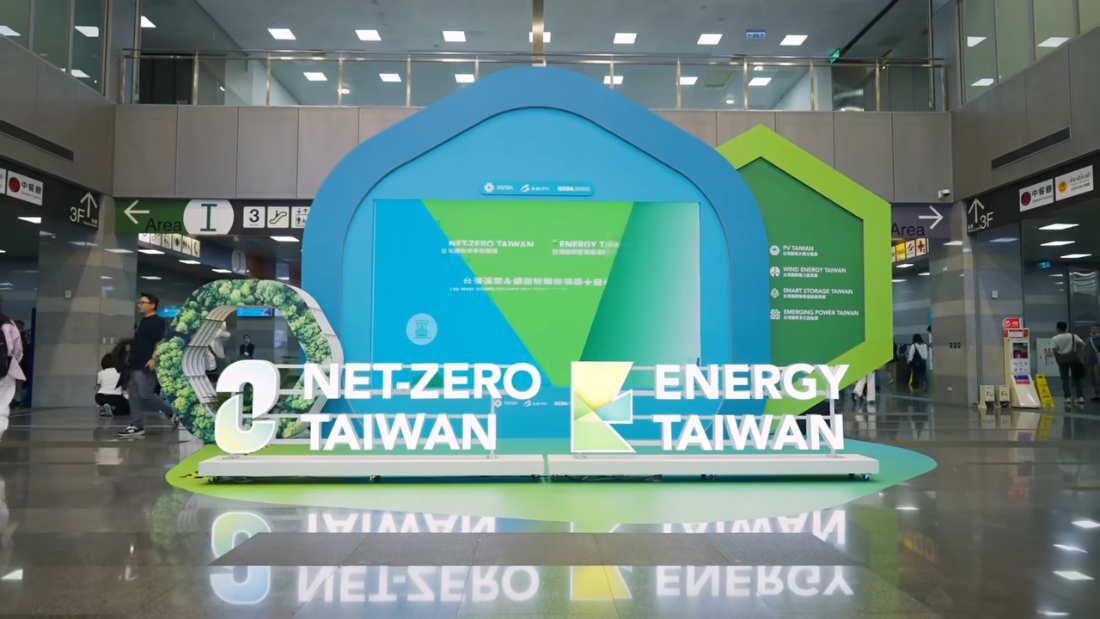
Energy Taiwan covers solar, storage, wind, and power systems. Having the offshore summit the day before helped us make sense of one part of that much larger industry. We heard about the money going into wind farms, the difficulty of getting projects built, and the business of keeping them running afterward.
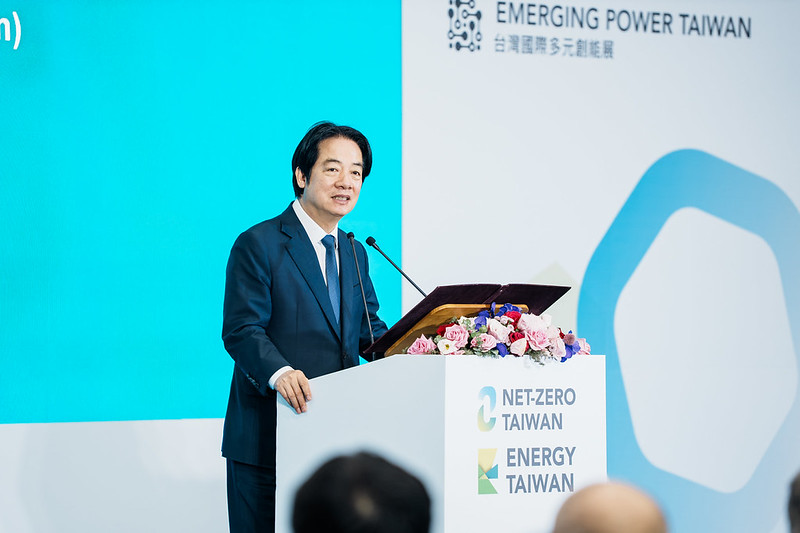
President Lai’s opening address
President Lai Ching-te spoke at the opening of Energy Taiwan and Net-Zero Taiwan on October 14. One part of his address stayed with us: emissions reduction affects whether Taiwanese businesses can keep winning orders. International customers are asking more of their suppliers, so companies here have to take that into account in how they operate.
He also spoke about carbon-fee revenues and the Taiwan Green Growth Fund as sources of support, and about reliable electricity as AI adds to demand. Renewable generation, storage, efficiency, and the grid all came into it. We heard much the same concern at the offshore summit: how to get enough green power to the businesses that need it.
The people we met
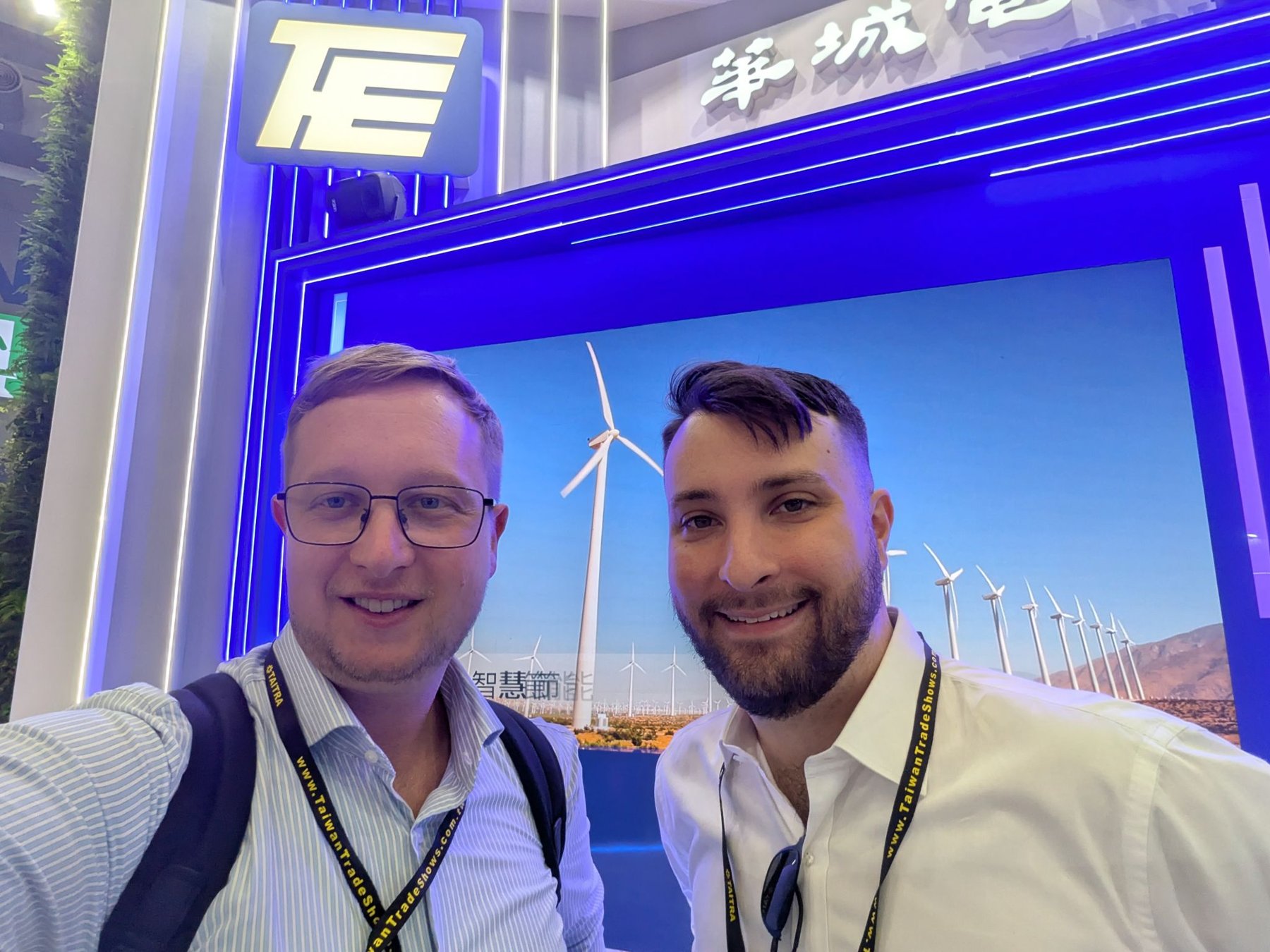
Coming from software and data, we were excited to learn about the unique challenges in the offshore energy industry. People gave us their time and talked us through the work, and we came away with plenty to follow up on.
We’re glad we made the trip. To everyone we met at the summit or on the exhibition floor: thank you for making room for us in your week. We’d be very happy to pick things up again, and to hear how the projects we learned about are coming along.
The scale of the opportunity
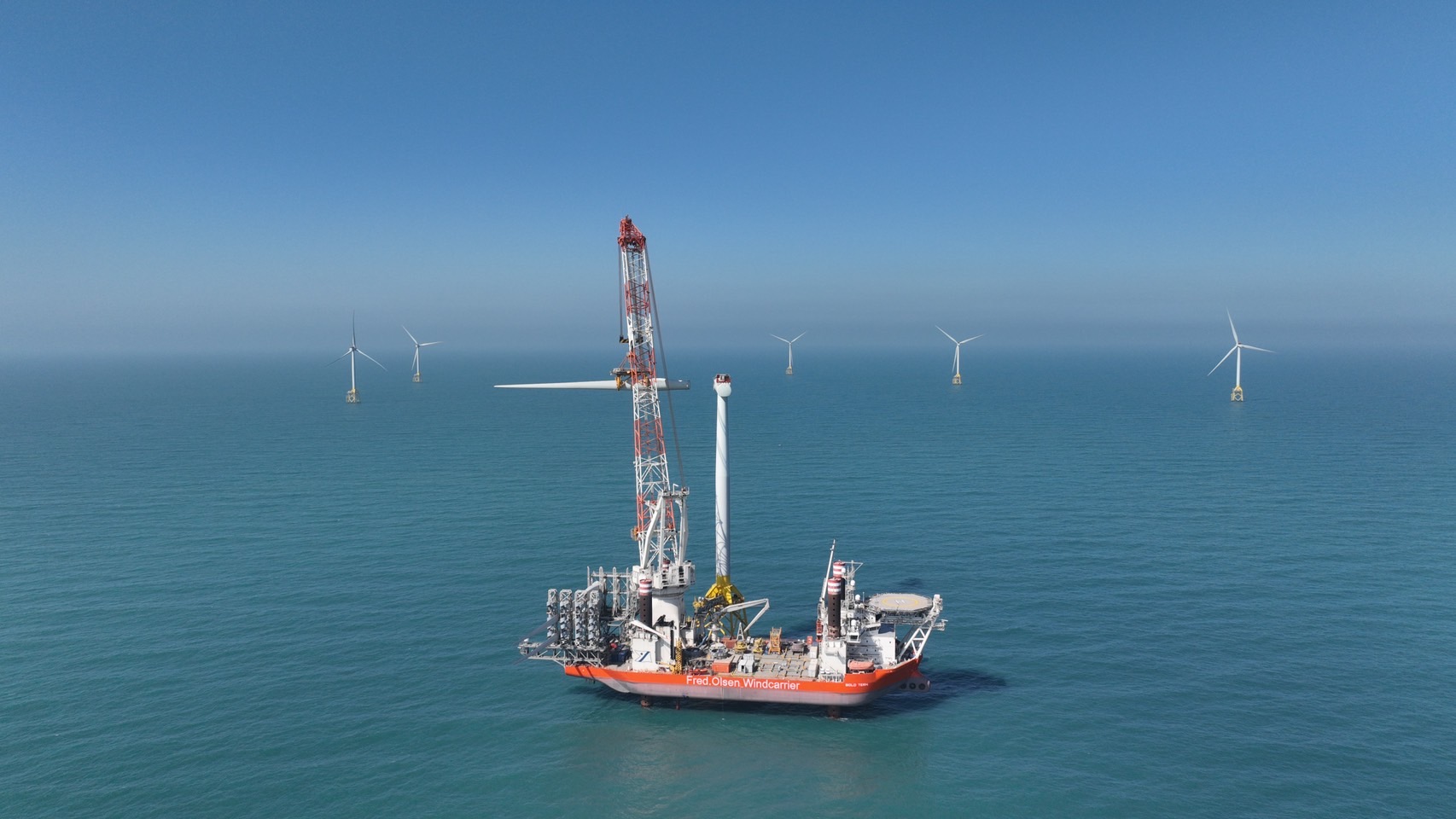
Taiwan has become a major offshore-wind market. The Energy Administration’s September update reported more than 500 installed offshore turbines and roughly 4.9 GW of capacity. It also put Taiwan fifth worldwide for cumulative offshore-wind capacity in 2025, and third for new installations that year.
With that much equipment already offshore, maintenance is a substantial part of the industry’s future. The turbines need inspections, servicing, and repairs, and the companies doing that work need people and equipment available locally.
We’re excited about the opportunity to keep working in this market, both as new projects develop and as existing farms move through years of operation.
How the projects are getting financed
The financing talks kept coming back to the contracts with electricity buyers. A business can want renewable power and still hesitate over the price or the terms. The developer needs an agreement that gives lenders enough confidence in what the farm will earn. Getting those sides to agree is a lot of the work.
Two financings from 2025 show the scale involved. Fengmiao I reached financial close in March, securing roughly TWD 103 billion from 27 Taiwanese and international banks, backed by long-term power purchase agreements with corporate buyers. In July, Greater Changhua 2 secured around TWD 90 billion, with 25 banks and support from five export credit agencies.
The government’s September roadmap proposed improving green-energy financing and investment conditions, along with a more predictable schedule for selecting new projects. Those were proposals. The need for a clearer view of upcoming work was something we also heard from the industry at the summit.
Data centers are an example closer to our own sector. Adding computing capacity means finding the electricity to run it, and operators chasing renewable power need to know when it will arrive and what it will cost. A wind developer, meanwhile, needs a buyer willing to commit on terms that support the financing. Both can want the project to happen and still face a hard agreement to reach.
What supports a wind project's financing
- Electricity buyers
Long-term power contracts support expected revenue.
- Equity investors
Owners commit capital and bear the remaining investment risk.
- Lenders
Debt is provided against the project’s contracts and expected cash flow.
Commercial agreements and funding support construction and the farm’s long-term operation.
Power contracts support revenue. Equity and debt provide capital.
The wider pressures on offshore wind
The regional outlook covered cost inflation, supply-chain constraints, and how projects are awarded, pressures that extend well beyond Taiwan. The IEA’s 2025 outlook flags the same rising costs and permitting delays across wind development. The supplier presentations gave us a better sense of what those broad descriptions mean for a business trying to plan its next few years.
One supplier’s Taiwan outlook set a large fleet needing maintenance and strong demand from technology companies against a difficult cost picture. Distance from parts of the established supply chain adds complications, and buyers still need electricity at a price they can accept. The presentation was cautious that either side would improve soon: more demand alone doesn’t settle what a project costs to deliver or who can afford its power.
The physical work is changing too. Speakers described larger turbines in deeper water, where currents and seabed conditions shape operations and the equipment and vessels a company needs. Safe access is its own constraint: storms, swell, and strong currents interrupt work offshore, so a schedule has to allow for them even when people and equipment are ready.
A growing market can still be a difficult one
The supply-chain discussions were more cautious than the scale of the market might suggest. A supplier deciding whether to invest in equipment or hire a team needs some confidence about when orders will arrive. A project can be part of a country’s energy ambitions for years before it becomes work a contractor can put on the schedule.
Speakers talked about what happens in the gaps. People and equipment can move to other markets or sectors. A factory still has costs while it waits for the next order. By the time a project is ready to proceed, the capacity it expected to use may have other commitments.
That helped explain why a steady sequence of projects mattered so much in the discussion. Building a local supply chain takes time and investment. Keeping it in place depends on enough projects getting through financing and into delivery at a pace suppliers can work with.
There are constraints before construction, too. The Taiwan market presentation covered how hard it is to find sea areas that work commercially while meeting environmental requirements and accommodating other users. Wind conditions are only part of it: a site also has to be somewhere a project can get permission to build, connect to the grid, and operate. That is a lot of work before there is an order for a single turbine.
Where progress can get held up
- Finance
Funding and revenue contracts need to line up.
- Orders
Suppliers need commitments before investing.
- Delivery
Crews, equipment, and vessels must be ready together.
- Operations
Repairs depend on specialist capacity being available.
Financing, supplier commitments, and repair readiness all affect when work can happen.
Keeping experienced crews together
One supplier presentation went into crew training, reviews of completed jobs, and making changes after something goes wrong. That costs money before it can improve the next job. The talks about gaps between projects were also about keeping those crews together long enough to use what they had learned.
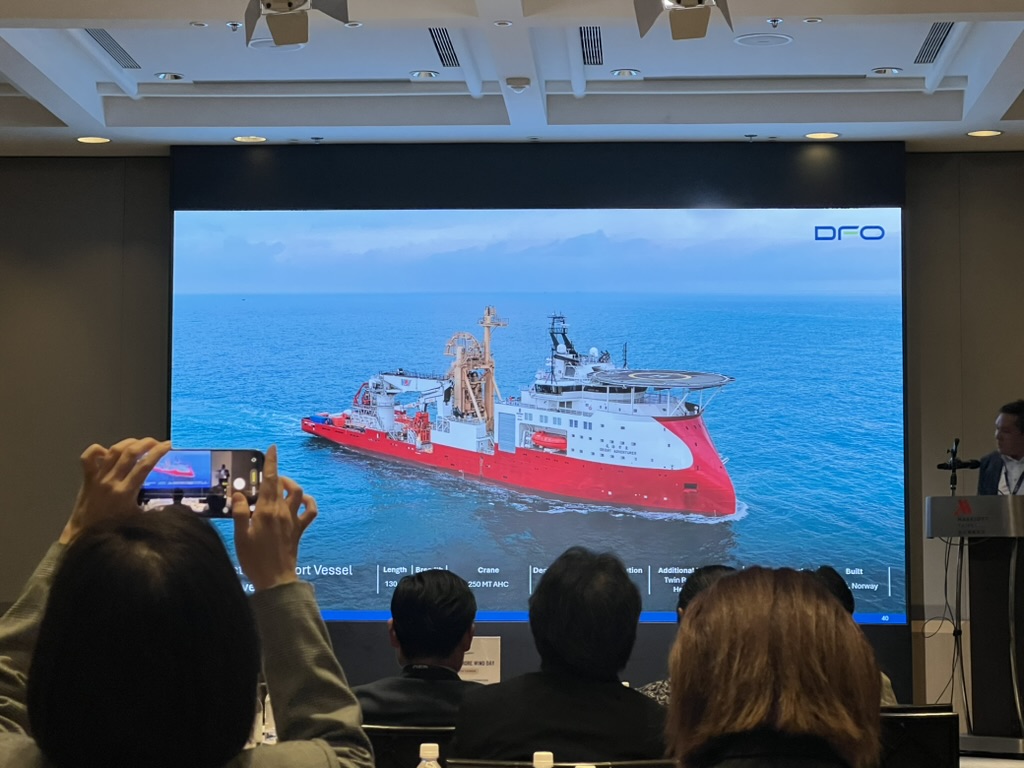
There is experience to draw on from oil and gas, where offshore lifting, inspection, and logistics are established work. One speaker walked through moving equipment from the yard, through the port, and onto a vessel: it has to suit the job, fit the available space, and be ready on time. Wind still brings its own training and procedures, even where the underlying skills are familiar.
One vessel presentation covered the complications of registering and operating ships in Taiwan: ownership, licensing, local crewing, and finding local support for repairs, fabrication, and spare parts. For an owner, all of that sits alongside where the next contract will come from. A growing market still leaves awkward gaps between jobs, and committing to a ship and a local crew means carrying costs through them.
Keeping the farms running
The suppliers weren’t all planning around new wind-farm construction. We heard about cable work for telecommunications as well, and one company’s plans included repair equipment, onshore cable storage, and warehousing. That made sense after the discussion about uneven orders. A crew still needs to be paid while the next wind project works its way through financing.
Knowing where a cable has failed is only the start. The vessel and equipment still have to get there, and production can be lost in the meantime, with a single fault affecting several turbines or the connection to shore. Speakers favored keeping repair equipment in Taiwan that works across suitable vessels rather than bringing it in each time, which helped us see why local readiness got so much attention.
Everyday servicing has its own demands. Technicians need safe access and the right spare parts, and a major component replacement may need an entirely different vessel. One proposal was to share the cost of keeping a jack-up vessel in Taiwan, with operators paying annual fees for reserved days. It hadn’t reached a contract, but the question behind it interested us: how much to commit now for a repair you can’t yet put a date to.
The service company has wages and equipment costs between jobs. The wind-farm operator is exposed to lost electricity sales while it waits. A service agreement has to cover both concerns, which sounded difficult enough before adding weather and vessel availability. We left the maintenance sessions with a better sense of how much has to be arranged before anyone goes offshore.
Looking toward Japan and Korea
Japan and South Korea came up throughout the regional discussions as markets with more offshore-wind development ahead. Suppliers in Taiwan are looking at that work too. One survey supplier described two directions for the business: more work on existing farms here, or site investigation for new projects elsewhere in the region.
Those are different kinds of work. A farm already producing electricity needs servicing now. A prospective site needs investigation well before anything gets built, and the project may still have a long way to go. A supplier planning around both has to judge when the work is likely to arrive.
Japan’s technical development roadmap leans toward floating offshore wind, and South Korea’s first-half 2026 bidding results include fixed-bottom and floating projects with plans for local supply-chain participation. There is plenty of ambition in both markets, but the regional outlook also dwelt on the costs and approvals between that ambition and construction. We would be cautious about treating a target as work already booked.
Some experience travels more easily than other parts of the business. Engineering knowledge can move between projects, while local facilities, construction teams, and familiarity with conditions take time to build. In the Q&A, people discussed sharing experience and specialist services across Asian markets: Taiwan has already worked through years of construction and operations, and some of that could be useful to Japan and Korea while their own local industries develop.
Where AI and data fit
One Belgian monitoring company we spoke with gave us a useful example of the data work involved. It uses fiber-optic sensing and other technologies on subsea cables and pipelines, and to detect moisture beneath insulation. Its business covers water as well as energy, so the applications went further than offshore wind.
After the cable-repair talks, the interest in continuous monitoring made sense: an earlier signal that something needs checking gives an operator more time to arrange an inspection. We’d like to use AI to help review those measurements, with the readings and the cable’s history alongside any alert. An engineer would still decide what it means and what to do, and the repair logistics we’d heard about would still apply.
Seabed mapping caught our attention too. The summit program included digital surveys and how their results get used in project decisions. There is data work in that handoff alone. A later inspection needs to be compared with the right survey, at the right location, with some understanding of how each measurement was made.
This is where we can put our software, data, and AI experience to work: connecting survey records with monitoring data and building tools that help engineers review alerts and compare inspections. We’re excited to build on our work in Taiwan’s offshore-wind industry and take on more of these problems with the people who know the assets.
We left with a lot to follow up on. Thanks to everyone who made time for us in Taipei.
Zach Phillips-Gary · Jinka CTO · October 29, 2026
Photo credits
President Lai photograph: Office of the President, ROC (Taiwan), under the Open Government Data License 1.0.
Formosa 2 photograph: Ministry of Economic Affairs (2023), via Wikimedia Commons, under the Open Government Data License 1.0.
